Sunday, September 13, 2009

2009-09-13-Talawe

Last minute plan was made with Mom and Dad to visit this place.
I had not been to Talawe anyway for a long time atleast 7months.

As usual started with loud calls of Ashy and Plain prinias.
Plain prinia


Plain prinia


Also a nice sighting of a painted grasshopper was a nice start for the trail.

Then there was a sight of the scaly breasted munias on the grass on the side and then came and sat on the trail in front of us.

Going ahead on the right hand side grass we could see the white eared bulbul and a pair of yellow eyed babblers calling out.
White eared bulbul


Butterflies and other insects were also visible in plenty. There were the black caterpillars, common grass yellow, salmon arab, chocolate pansy, common crow, common rose, peacock pansy, blue tiger and lovely green grasshoppers and robber flies.
Painted Grasshopper


The red munias were collecting nesting material and food and hence could be seen a lot flying around and sometimes landing in front of us on the trail.
Red Munia


Atleast 2 long tailed shrikes were sighted.
Long tailed shrike


A flock 5-10 birds flew past and i tried to click some quick pics.
These were a flock of chestnut tailed starlings (blythii subspecies which is also considered by some as a separate species).
Chestnut tailed starling (blythii subspecies)


A lone osprey and a brahminy flew above our head.
Osprey


Cormorants were seen sitting on the mangrove bushes.
A pair of spot billed ducks and a lone one were also seen.
There black winged stilt, red shanks and red wattled lapwing in the water.
Black winged stilt


Near the farms we could again see the chestnut tailed starlings, spotted dove with nesting material, a long tailed shrike, red vented bulbuls, green bee eater, white throated kingfisher, munias and jungle babblers.

There was nothing much on the sea shore as there were some fisherman and also since it was a very low tide.

All in all a good many species seen.

List
1) Ashy prinia
2) Plain prinia
3) Red munia
4) Black headed munia
5) Scaly breasted munia
6) White breasted kingfisher
7) Common kingfisher
8) common sandpiper
9) Common red shank
10) Little egret
11) Grey heron
12) Glossy ibis
13) Zitting cisticola
14) Yellow eyed babbler
15) Brahminy kite
16) Osprey
17) Chestnut tailed starling
18) Long tailed shrike
19) Spotted dove
20) Laughing dove
21) Cormorant
22) Red wattled lapwing
23) Gull billed tern
24) Grey heron
25) Jungle babbler
26) Green bee eater
27) Black winged stilt

Monday, September 07, 2009

2009-09-06 Uran

The first halt decided this time was at a petrol pump just ahead on the main road before we take right to the police station.
The halt was for the search of black breasted weavers.

Before that went to the railway crossing just to drop Mayuresh where he was going to meet others.

There were some good sightings while going towards the railway crossing. Wire tailed swallows sitting on a parapet wall just near the road, a tree full of cormorants and most of all a mongoose right on the side of the road.

But it did not give us enough time to click its pics but was blessed later.

Behind the petrol pump are a lot of reeds and a big water body behind it.

In the water body we could see spotbilled ducks and coots. On the shore were a pair of were lesser whistling teals and the amazing thing was it had 2chicks under its wing.

Lesser whistling ducks with chicks


There was also a little grebe in the water but was sitting on a nest, another of first timer for a me.

Little Grebe on the nest


The black breasted weavers were seen going and coming into the reeds and mostly had a nest there. So were the red avadavats, black headed munias atleast 6-7 of them.

Black headed munia


From there we proceeded to the police station road.
We decided go straight to the end of the road to search for rudy breasted rails and painted snipes.
No luck finding them but on the way next to the road in the grasses just in near the water we came across a flock of male and female baya weavers and the scaly breasted munias feeding on the grass seeds.

Baya weaver (female)


Baya weaver (male)


A little on the usual spot, the wires we saw the huge flock of migrating barn swallows.

Barn swallow


Barn swallow


We went out of the car in the search of the rail but no luck.
Till this time the rain started pretty heavily and even with jackets we were pretty wet.
Interesting spotted a black winged stilt calling loudly as we were walking on the road but still sitting still near by.

Later we found the reason being that it had its chicks around and it was hiding them below its wings. There were 2 of them.

Black winged stilt chick


From there we came back to the water body next to the police station a location to find pheasant tailed jacanas, common moorhen, etc.

We could not see these but saw cotton pygmy geese, many terns and a little grebe.

Little Grebe


As we were watching the little grebe a baya weaver flew in and sat on the grass blades near to us. It tore the grass blade nicely into 3 threads :-) and soon we could see where it was building the nest. All this we were watching from within the car at a long distance so as not to disturb it. In fact there was a colony of atleast 4-5 weavers.

Baya weaver collecting nesting material


Baya weaver nest


Just then we saw a small blue kingfisher perched on a tree.
It came and sat on a pole in the center of the water and a second one sat on a bush very near to the water.


Common kingfisher


Common kingfisher on the bush


Then one of them dived twice to catch a fish and I could get one in flight and then with a catch in its mouth.

Common kingfisher fishing


Common kingfisher with the catch


Common kingfisher from the back


Till now the rain had stopped and decided to go back in search of the rail.
This bird at first put us into a bit of confusion initially but we finally concluded it to be a ruff and then also confirmed by experts.

Ruff


As we were looking around we could see a huge black cloud coming towards us. It was not a rain cloud :-) but a flock of atleast 200 gulls.
These were huge birds. There were 2 types of birds. One which had spots on the belly and brownish colored. The other one were plain white from below and a beak having a red dot. As per expert these are Heuglin's gull first one is 1st winter.

Heuglin's gull (juvenile)


Big flock of Heulglin's gull


From here decided to back to the police station and try the standard trail which leads to the water body at the back along the railway tracks.

Here we got fantastic view of 2 mongoose and red munias.

On the trail just in the front of the police station
Red munia, Spotted dove and a mongoose in the background.


The mongoose


Spotted dove


Red Munia (Male)


We decided to one final chance at getting some photos of the black breasted weaver proceeded to the petrol pump.
It started raining so heavily that we had to wait for atleast 10-15 to get some clear view let alone photo opportunitly.

In this rain the black headed munias and the Ashy prinia gave some good view by pearching on the nearby bush.

Black headed munia in rains


Black breasted weaver


Sunday, August 16, 2009

Out of the window

Have you seen birds, butterflies, insects, etc around where you stay.
If so you must have also observed various trees around.
These trees are the prime provider of shelter or food or observation points or all for different life forms.

I have tried below to capture some of the bird species, their habits and the trees on which they were seen around my place.


Trees Birds (Updated on 18 Nov 2020 from 2008)
  1. Mango Tree
  2. Badam Tree
  3. Imli Tree
  4. Karanj Tree
  5. Cluster Fig Tree
  6. Banayan Tree
  7. Peepal Tree
  8. Largerstromia (Tamhan) Tree
  9. Tabebuia Tree
  10. Copper Pod Tree
  11. Rain Tree
  12. Coconut Tree
  13. False Ashoka
  14. Drumstick Tree
    Rare Visitors
  1. Peregrine Falcon
  2. Red Breasted Flycatcher
  3. Indian Roller
  4. Orange Headed Thrush
  5. Black Hooded Oriole
  6. Black Naped Oriole
  7. Brown Breasted Flycatcher
  8. Red Breasted Parakeet (Mostly Escapee)
  9. Black Naped Monarch
  10. Summer Vistors - Regular
  11. Cattle Egret
  12. Black-Crowned Night Heron
  13. Indian Pitta
  14. Winter Vistors - Regular
  15. Indian Paradise Flycatcher
  16. Indian Golden Oriole
  17. Blyth's Reed Warbler
  18. Ashy drongo
  19. Greenish Warbler
  20. Green Beeeater
  21. Resident Birds - Irregular
  22. Oriental White eye
  23. Common Iora
  24. Crow pheasant
  25. Alexandrine parakeet
  26. Tickell's Blue Flycatcher
  27. Barn Owl
  28. Scaly Breasted Munia
  29. Purple Sunbird
  30. Shikra
  31. Resident Birds - Regular
  32. Oriental White Ibis
  33. Glossy Ibis
  34. Coppersmith barbet
  35. White Throated Kingfisher
  36. White-Spotted Fantail
  37. Purple rumped sunbird
  38. Oriental Magpie Robin
  39. Red whiskered bulbul
  40. Red vented Bulbul
  41. Rose Ringed Parakeet
  42. Black Kite
  43. Common Tailor
  44. Common Myna
  45. Asian Koel
  46. House sparrow
  47. Large Billed Crow
  48. House Crow
  49. Rock Pigeon


Trees Around


Mango Tree

I have seen Coppersmith barbet, purple rumped sunbird, magpie robin using this tree to call out during breeding season.
Other birds like fantail flycatcher, tailor bird ,warbler (only during winter) and even egrets come here to feast on the insects flying around this tree.
Golder oriole and bulbuls find it a safe shelter.

(Back to top)
Badam Tree

Birds use it for feasting on insects and as shelter during rains mainly the tailor bird, fantail flycatcher, warbler, sparrows and purple rumped sunbirds.
Its fruits are feasted upon by the Alexandrine and rose ringed parakeets.
Golden Oriole also finds caterpillars on the baddam tree.

(Back to top)
Imli Tree

This is a big tree providing shelter for all kinds of birds from Crows, mynas, Koel, Drongos to even a golden Orioles and Common Ioras.
For many years have been seen it being used by Cattle egrets atleast good many 10-15 pairs used to nest here. This year (2009) have not seen many and those who built their nests abondened it.
Have seen Coppersmith Barbet nesting in dry exposed branches on this tree.

(Back to top)
Karanj Tree

It flowers in around March and attracts a lot of bees. It also attracts other insects and insect eating birds like fantail, warblers and paradise flycatcher.

(Back to top)
Cluster Fig tree

This one has lot of caterpillars breeding on it so it is favorite tree of Tailorbird, Sunbirds especially in breeding, Golden Oriole, Paradise Flycatcher, Oriental White-eye, etc.

(Back to top)
Banayan Tree

This is one of the trees which attracts maximum birds and animals anywhere it grows. Not just for food when its fuiting but also for roosting & nesting.

(Back to top)
Peepal Tree

There is one tree very near but it has grown very tall and there is a banayan tree nearby which is so dense that the peepal tree behind it is not visible from my place. Another peepal tree is in a residential complex visible right in open and hosts a lot of birds like Coppersmith barbet, Koel, Oriental White-eye.

(Back to top)
Largerstroemia (Tamhan) Tree

A very common tree which flowers in around March-April and is filled in pink / lilac / purple flowers. Its hosts birds which like nectar especially the Purple Rumped sunbird and some bird looking for insects like the warblers, bulbuls and sparrows.

(Back to top)
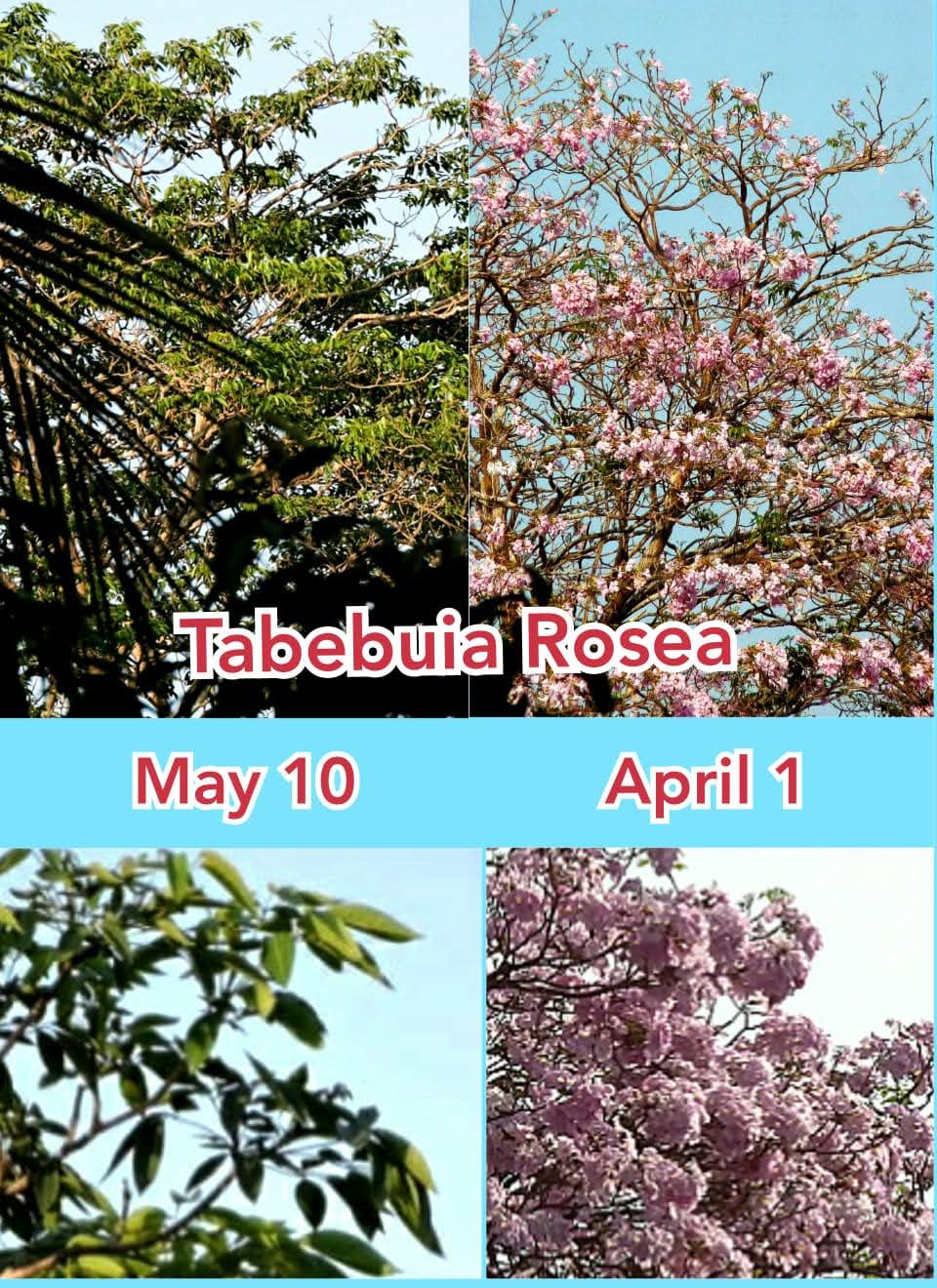
Tabebuia Tree

This is a huge tree around 50-60 feet tall and is completed covered in pink flowers in March.
During this time white-eyes, bulbuls, sunbirds, warblers and also bee-eaters & drongos.
This tree is also used by a unique bird in our area the Black Headed Ibis as a resting platform before roosting on rain tree and copper pod trees.

(Back to top)
Copper pod Tree

Its not very near but it provides nesting for Night Herons and hence they are visible around

(Back to top)
Rain Tree

Same as Copper pod tree it provides shelter for many birds and sometime also provides a place to nest.

(Back to top)
Coconut Tree

There are many coconut trees in dattaguru societs. Kites use them for roosting during the monsoon and some them even nest on it.

(Back to top)
False Ashoka (Polyalthia longifolia)
Its a very common tree planted along building boundaries as it alleviates noise pollution.
It seems to have no branches but if they are allowed to grow without trimming then they can grow like regular tree giving shade. I have seen scaly breasted munia and bulbul using it for nesting and koel enjoying its fruits. Had once seen a black naped oriole using it for roosting for a night.

Drumstick Tree
Purple rumped sunbirds take fancy to the nectar of these flowers and are seen every day almost the whole day.
I have also seen white eyes on it but using it only for resting only.
This tree now no more exists it fell in monsoon of 2017.

Birds Around


Peregrine Falcon (Falco peregrinus - 50cm)
Marathi Name: बहिरी ससाणा

Pic Taken: Nov 2020
(Back to top)

Red Breasted Flycatcher (Ficedula parva - 12cm)
Marathi Name: लाल छातीचा माशीमार

Pic Taken: Nov 2020

Pic Taken: Nov 2020

(Back to top)

Indian Roller (Coracias benghalensis - 27cm)
Marathi Name: भारतीय नीलपंख

Pic Taken: Jan 2019

(Back to top)

Orange Headed Thrush (Geokichla citrina - 20cm)
Marathi Name: नारिंगी डोक्याचा कस्तूर

Pic Taken: Jun 2019

(Back to top)

Black Hooded Oriole(Oriolus xanthornus - 25cm)
Marathi Name: बुरखाधारी हळद्या

Pic Taken: Feb 2015

Pic Taken: Feb 2015
Pic Taken: Apr 2016
Pic Taken: Feb 2017
Pic Taken: Mar 2017

Pic Taken: Mar 2018

(Back to top)

Black Naped Oriole(Oriolus chinensis - 25cm)
Marathi Name: सुरमा हळद्या

Pic Taken: Dec 2011
 
Pic Taken: Dec 2011
 
Pic Taken: Dec 2011
 
Pic Taken: Feb 2013
(Back to top)

Brown Breasted Flycatcher (Muscicapa muttui - 13cm)
Marathi Name: रतपकिरी छातीचा माशीमार

Pic Taken: Mar 2018

(Back to top)

Red Breasted Parakeet (Psittacula alexandri - 46cm)
Marathi Name: लाल छातीचा पोपट

Pic Taken: Nov 2020

Pic Taken: Nov 2020

(Back to top)

Black Naped Monarch (Hypothymis azurea - 16cm)
Marathi Name: काळ्या मानेचा आकाशी माशीमार

Female    Pic Taken: Aug 2017

Pic Taken: Mar 2017

(Back to top)

Cattle Egret (Bubulcus ibis - 88cm)
Marathi Name: गाय बगळा
This bird is generally seen along with the grazing cattle. It feed on the insects which are disturbed by the movement of the cattle. They like other egrets and herons nest in huge colonies and there is one such nesting colony on the imli next to our building.
The breeding adults have a beautiful brownish golden plumage and reddish yellowish beak and red eyes.

Pic Taken: June 2008


Pic Taken: June 2008
Pic Taken: May 2008
Pic Taken: May 2014
(Back to top)

Black-Crowned Night Heron (Nycticorax nycticorax - 55cm)
Marathi Name: रात ढोकरी

Pic Taken: Jul 2013
Pic Taken: Jul 2013
Pic Taken: Sep 2010
(Back to top)

Indian Pitta (Pitta brachyura - 18cm)
Marathi Name: नवरंग

Pic Taken: Jun 2019

Pic Taken: Jun 2019

(Back to top)

Indian Paradise Flycatcher(Terpsiphone paradisi - 50cm)
Marathi Name: स्वर्गीय नर्तक

Male Juvenile    Pic Taken: Jul 2013
Male Juvenile feeding on common Jay    Pic Taken: Apr 2017
Adult Male with streamers    Pic Taken: Dec 2017
Female    Pic Taken: Oct 2019
Pic Taken: Dec 2018
(Back to top)

Indian Golden Oriole (Oriolus oriolus - 25cm)
Marathi Name: हळद्या
One of my favorite bird because of its vibrant yellow color like that of turmeric (called Halad in marathi) giving it the marathi name.
It also has a very sweet note but at the same time its defending call is very harsh.
Pic Taken: Oct 2019

Female    Pic Taken: Sep 2009

Pic Taken: Feb 2015

Pic Taken: Jan 2016
Male    Pic Taken: Feb 2008


Juvenile    Pic Taken: April 2020
(Back to top)

Blyth's Reed Warbler (Acrocephalus dumetorum - 12cm)
Marathi Name: ब्लिथचा बोरू वटवट्या

Pic Taken: Dec 2007

Pic Taken: Dec 2011

Pic Taken: Jan 2012
(Back to top)

Ashy drongo (Dicrurus leucophaeus - 29cm)
Marathi Name: राखी कोतवाल
This is a migratory drongo seen after september. Golden orioles are generally seen with these drongos. Drongos are called kotwal as it keeps a watch out does not allow raptors and crows

Pic Taken: Feb 2009

Pic Taken: Oct 2014

(Back to top)

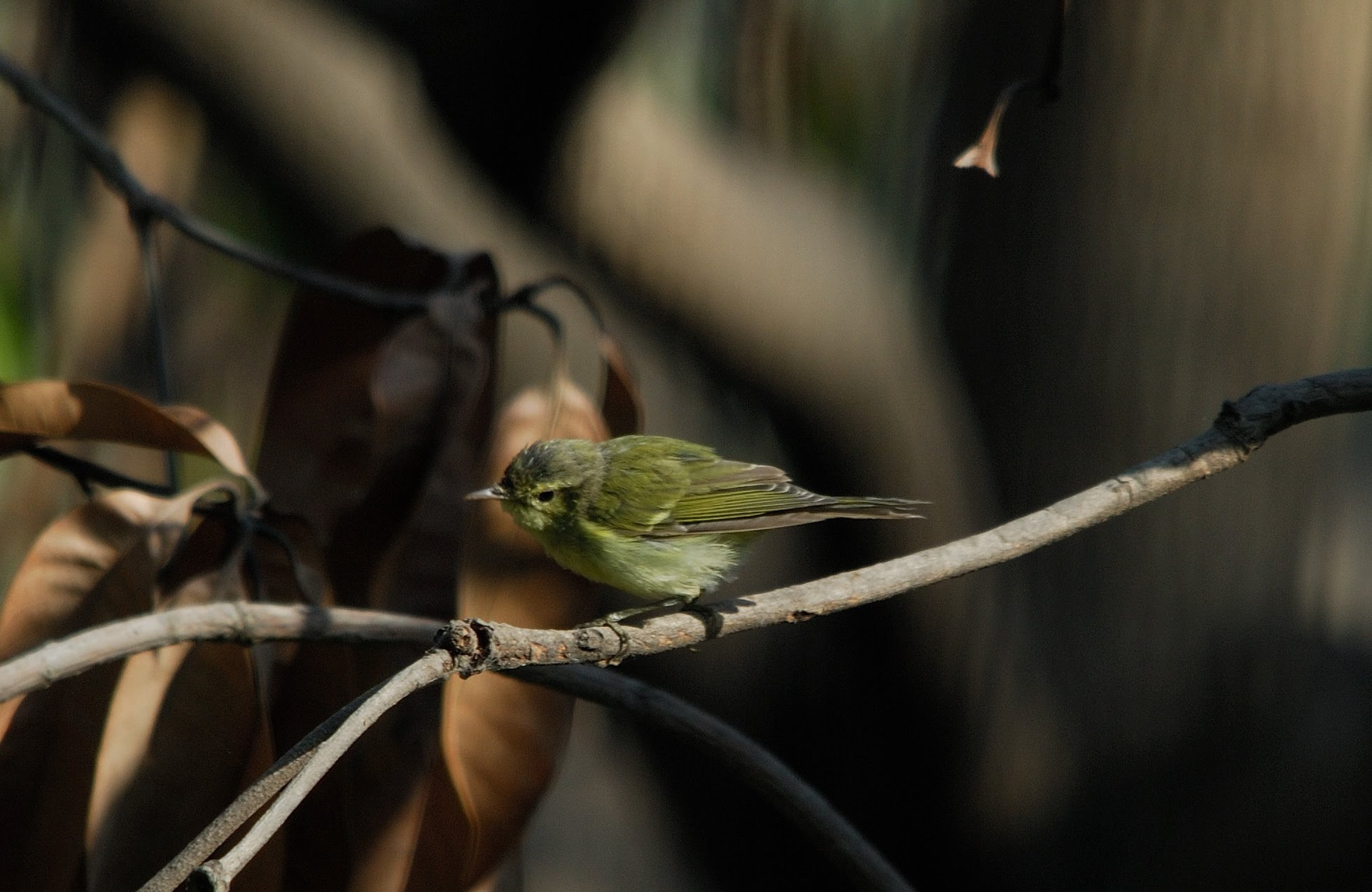
Greenish Warbler (Phylloscopus trochiloides - 12cm)
Marathi Name: हिरवट वटवट्या

Pic Taken: Feb 2014

(Back to top)

Green Beeeater (Merops orientalis - 16cm)
Marathi Name: वेडा राघू

Pic Taken: Nov 2020
(Back to top)

Oriental White eye (Zosterops palpebrosus - 10cm)
Marathi Name: चष्मेवाला
They feed on insects found on the bushes and are seen many times upside down looking for insects. Sometimes they also feed on nectar.

Pic Taken: May2009


Pic Taken: April2010

Pic Taken: May 2010
(Back to top)

Common Iora (Aegithina tiphia - 25cm)
Marathi Name: सुभग
A very beautiful singer but its call is heard only during the breeding season.
A very beautiful bird.
Pic Taken: March 2012
Female    Pic Taken: Dec 2013
(Back to top)

Crow pheasant (Centropus sinensis - 48cm)
Marathi Name: भारद्वाज
A bharadwaj one rainy evening was being chased away by a pair of fantail flycatchers. It is known fact that Bharadwaj steal small bird eggs and flycatchers are known to nest around.

Pic Taken: July 2009

(Back to top)

Alexandrine parakeet (Psittacula eupatria - 53cm)
Marathi Name: करण पोपट
This is much bigger than the normal Rose ringed parakeet. Also the red patch on the wing is very prominent. The mainly feed on fruits and are responsible dispersion of seeds like most of the fruit eating birds. Have seen them eating badam fruits.

Pic Taken: May 2009
Pic Taken: Feb 2008
(Back to top)

Tickell's Blue Flycatcher (Cyornis tickelliae - 12cm)
Marathi Name: टिकेलची निळी माशीमार

Pic Taken: Jun 2016
Pic Taken: Aug 2016

(Back to top)

Barn Owl (Tyto alba - 39cm)
Marathi Name: गव्हाणी घुबड

Pic Taken: Mar 2007
(Back to top)

Scaly Breasted Munia(Lonchura punctulata - 10cm)
Marathi Name: ठिपकेवाली मनोली

Pic Taken: Nov 2010
 
(Back to top)

Purple Sunbird (Cinnyris asiaticus - 10cm)
Marathi Name: जांभळा शिंजीर

Pic Taken: Apr 2020

(Back to top)

Shikra (Accipiter badius - 30cm)
Marathi Name: शिक्रा

Pic Taken: Mar 2016
(Back to top)

Oriental White Ibis (Threskiornis melanocephalus - 75cm)
Marathi Name: काळ्या डोक्याचा शराटी

Pic Taken: Dec 2011
Pic Taken: Feb 2015
Pic Taken: Feb 2020
(Back to top)

Glossy Ibis (Plegadis falcinellus - 60cm)
Marathi Name: मोर शराटी

Pic Taken: Dec 2011
Pic Taken: Feb 2015

(Back to top)

Coppersmith barbet (Psilopogon haemacephalus - 17cm)
Marathi Name: तांबट
It is famous for his call tuk-tuk-tuk which sounds like metal striking against metal giving it the name coppersmith barbet or tambat in marathi.

Pic Taken: Sep 2009


Pic Taken: Sep 2010

Pic Taken: Apr 2019

(Back to top)

White Throated kingfisher (Halcyon smyrnensis - 28cm)
Marathi Name: पांढऱ्या छातीचा धीवर

Pic Taken: Jun 2014

Pic Taken: Oct 2020
(Back to top)

White-Spotted Fantail (Rhipidura aureola - 17cm)
Marathi Name: पांढऱ्या ठिपक्यांचा नाचण
As the name suggests it feeds on flies and is very skillful in catching flies in flight. Also as per its first name its tails is fan like.
This bird is one of the most vocal but the most difficult one to click mainly because of the fact that it never sits still.
They are known to be very aggressive defenders. I have many times seen the pair make a huge noise when a crow comes near their tree hosting the nest and even ones seen them plucking at a bhardwaj consistently till it gave up and flew away.

Pic Taken: Sep 2009


Pic Taken: Dec 2012
Pic Taken: Feb 2013
Pic Taken: Oct 2020

(Back to top)

Purple rumped sunbird (Leptocoma zeylonica - 10cm)
Marathi Name: जांभळ्या पुट्ट्याचा शिंजीर
Sunbirds mainly feed on nectar. The beaks are down turned with a long tongue so that they can suck the nector out of the flowers. I have seen them many times bathing in the water collected on the leaves. The

Pic Taken: Aug 2009


Pic Taken: Aug 2009


Pic Taken: Aug 2009
Pic Taken: Aug 2009
(Back to top)

Oriental Magpie Robin (Copsychus saularis - 20cm)
Marathi Name: दयाळ
Pic Taken: May 2009

Juvenile    Pic Taken: Aug 2013
(Back to top)

Red whiskered bulbul (Pycnonotus jocosus - 20cm)
Marathi Name: शिपाई बुलबुल

Pic Taken: Oct 2014

Pic Taken: Sep 2018

(Back to top)

Red vented Bulbul (Pycnonotus cafer - 20cm)
Marathi Name: लाल बुड्या बुलबुल

Pic Taken: Feb 2007


Pic Taken: Dec 2012
(Back to top)

Rose Ringed Parakeet (Psittacula krameri - 42cm)
Marathi Name: पोपट

Pic Taken: Dec 2007


Pic Taken: May 2008
Pic Taken: May 2008
Pic Taken: May 2012
(Back to top)

Black Kite (Milvus migrans - 61cm)
Marathi Name: घार
Pic Taken: Sep 2009


Pic Taken: July 2009
Pic Taken: Feb 2013
(Back to top)

Common Tailor (Orthotomus sutorius - 13cm)
Marathi Name: शिंपी

Pic Taken: Feb 2008
 
Pic Taken: Dec 2012
Pic Taken: Oct 2014
(Back to top)

Common Myna (Acridotheres tristis - 23cm)
Marathi Name: साळुंकी

Pic Taken: June 2010
 
Pic Taken: Oct 2020

(Back to top)

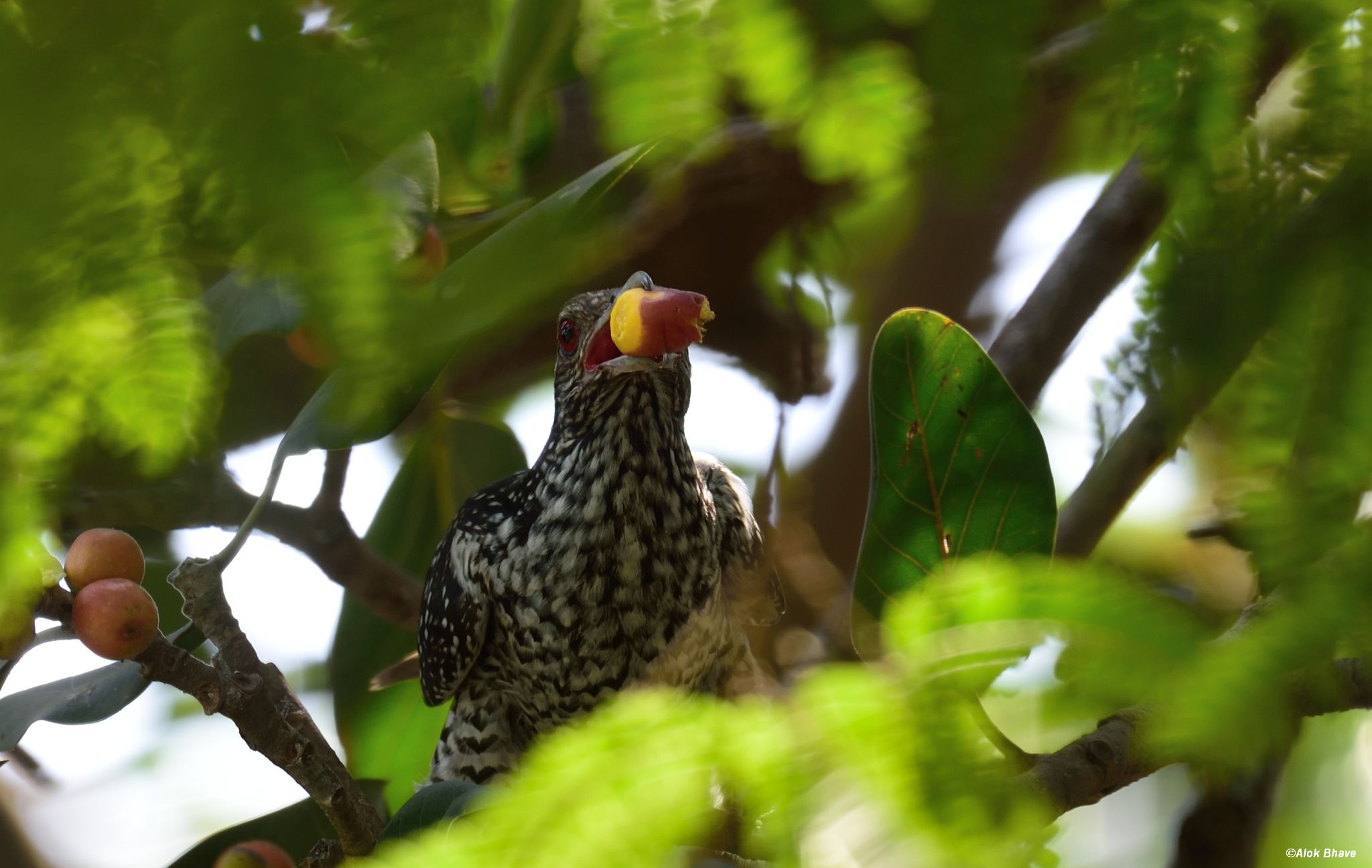
Asian Koel (Eudynamys scolopaceus - 45cm)
Marathi Name: कोकीळ
A member of a cuckoo family popularly known as Kokila in marathi.
The sweet calls of these are heard a lot during the summer.
Like any other cuckoo its a parasite and lays eggs in other birds nests. Have seen crows raising koel kids around a lot.

Female    Pic Taken: Oct 2017
Male    Pic Taken: Oct 2017
Female    Pic Taken: Oct 2017
Pic Taken: June 2009

(Back to top)

House sparrow (Male) (Passer domesticus - 15cm)
Marathi Name: चिमणी

Pic Taken: Nov 2007
Pic Taken: May 2009

Male    Pic Taken: May 2009

Female    Pic Taken: Aug 2009

Pic Taken: Oct 2013
(Back to top)

Large Billed Crow(Corvus macrorhynchos - 50cm)
Marathi Name: डोमकावळा

Pic Taken: Sep 2012
(Back to top)

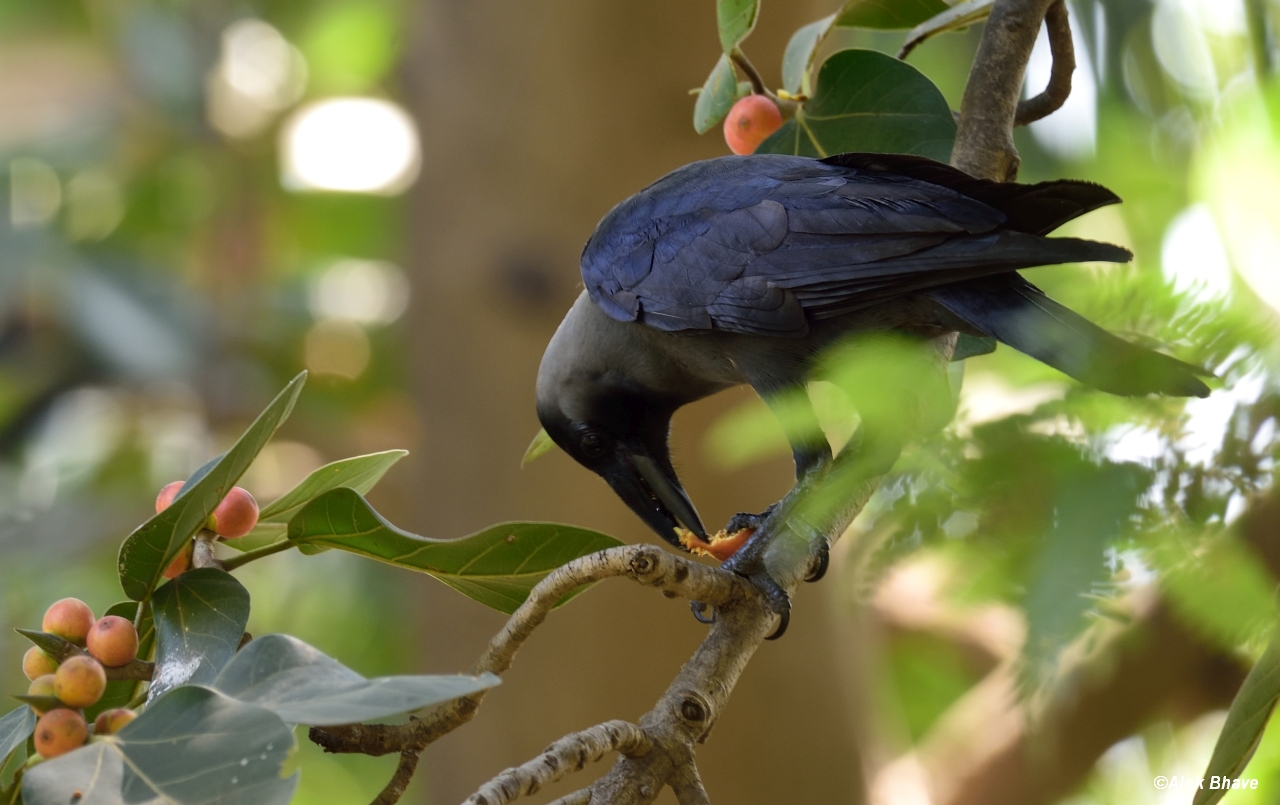
House Crow(Corvus splendens - 40cm)
Marathi Name: कावळा

Pic Taken: Dec 2017
Pic Taken: Nov 2018
(Back to top)

Rock Pigeon(Columba Livia - 33cm)
Marathi Name: कबुतर

Pic Taken: Dec 2009
(Back to top)